Low Speed, High Stakes: Kitting Up for the UK's Pump Track Summer
Pump tracks have quietly become the most sociable bit of cycling infrastructure in the UK. A strip of tarmac or rolled gravel behind a leisure centre, a set of rollers in a country park, a cluster of berms beside a bike shop — suddenly there's somewhere to ride that doesn't need a uplift, a full day or a weather window. You can nip down after work, do twenty laps, and be home before the midges get going.
That convenience comes with a catch. Pump track riding is low speed and high frequency, which means the falls are low speed and high frequency too. They are not the long, dramatic offs you get on a Welsh enduro stage. They are the clipped front wheel on a tight berm, the elbow that catches a roller, the knee that meets the deck when a foot slips. They happen often, they happen close to home, and they add up. This is a guide to padding for that reality — not for a fortnight in the Alps.
The pump track punishes different bits
On a trail, armour tends to be judged on impact protection for the big one. On a pump track, the question is more about repeatability. You are on and off the bike constantly, your arms are moving through a big range as you pump, and your knees are deep in a bend for most of the lap. A pad that feels fine standing in a shop doorway can be a distraction by lap three.
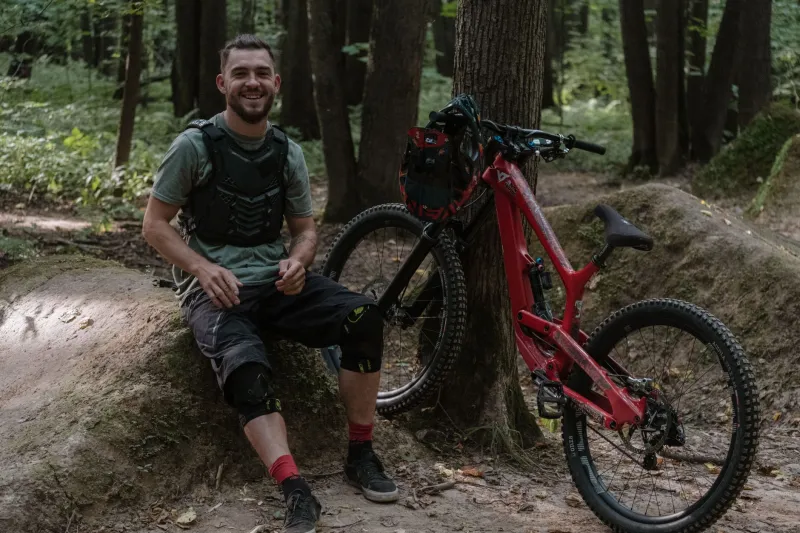
Knees and elbows take the brunt because they are the bits that hit the ground when the front end washes or a foot comes off. Wrists deserve more attention than they usually get. Putting a hand out is instinctive, and a low-speed tumble onto tarmac or hardpack can jar a wrist just as effectively as a faster crash. That doesn't mean strapping on downhill gear — it means thinking about coverage, fit and whether the pad stays where you put it when you're moving.
Fit it in a riding crouch, not a queue
Standing still in a shop is the worst way to fit body armour. Pump track riding is dynamic: elbows bent, shoulders active, knees driving. A knee pad that sits perfectly when you're upright can slide down the moment you drop into a roller, and an elbow sleeve that feels snug with arms straight can pinch when you bend to pump.
Do the awkward thing. Put the pads on and get into a riding stance in the shop, or at least crouch and swing your arms. Check for gaps at the back of the knee, make sure the elbow cup sits over the pointy bit rather than above it, and see whether the straps stay put through a few deep bends. If the pad has a sleeve fit, check it doesn't roll down. If it's a hard-shell knee, check the hinge doesn't dig in.
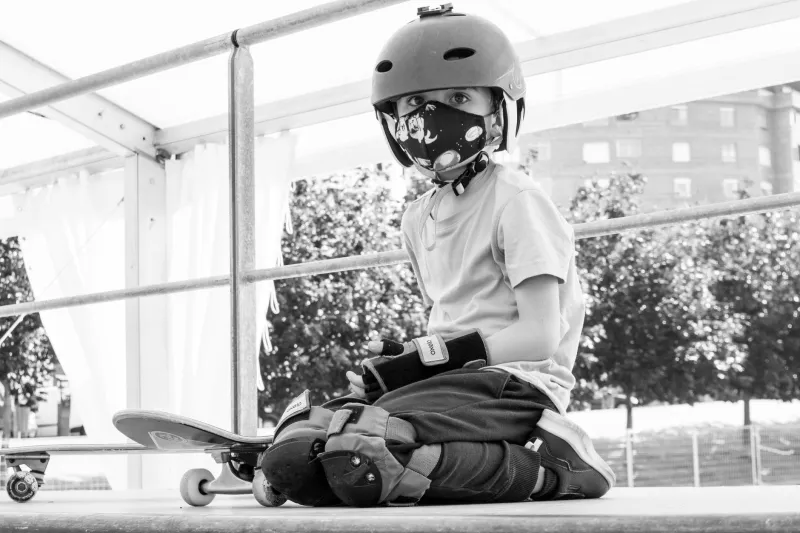
For kids especially, fit is the whole game. A pad that's slightly too big will rotate on impact, and a pad that's too tight gets left in the car. Bring their bike if you can, or at least get them to squat and pedal in the shop. The best kids' armour is the stuff they forget they're wearing.
Light, flexible and breathable beats overbuilt
UK pump track sessions are often short and sweaty. A summer evening lap session can be warmer than you expect, especially on tarmac that's been in the sun all day. Heavy, stiff armour that's designed for uplift days will cook you, and a cooked rider makes sloppy decisions.
Look for flexible impact foam, perforated panels and mesh where it matters. CE Level 1 protection is usually plenty for pump track use — you're not hitting rock gardens at speed — but check the certification is genuine and suited to the pad's intended use. Sleeve-style elbow and knee pads with silicone grippers tend to work well because they stay in place without needing to be cinched tight. Hard-shell caps can be useful for knees if you're learning, but they're not compulsory.
Wrist protection is a personal call. Some riders like a simple wrist wrap for confidence, especially kids learning to put a hand out. Others find them restrictive. If you do use them, make sure they don't stop you gripping the bar properly.
Where extra protection earns its keep
Pump tracks are not the place for a full-face helmet and a spine board. A well-fitted, properly fastened bike helmet is the non-negotiable, and gloves are a sensible shout for grip and for the inevitable hand-out moment. Beyond that, knee and elbow pads cover the most common contact points.
Hip protection is worth considering for adults returning to riding or for anyone who's had a recent knock, simply because low-speed slides onto hard surfaces can bruise more than you'd think. For kids, the priority is coverage they'll actually keep on: knees, elbows and a decent pair of gloves. Don't overpad a child to the point where they can't move — they'll ride worse and enjoy it less.
The kit check that actually matters
Before you head out, do a two-minute check. Fasten every strap, bounce on the spot, and see if anything shifts. Spin the cranks or push the bike a few metres — does the knee pad catch the frame? Does the elbow pad rotate when you lift the front wheel? If something moves now, it'll move worse when you're tired.
After the session, don't leave sweaty pads in a kit bag in the boot. They'll smell like a damp wetsuit by Wednesday and the elastic will suffer. A quick rinse and air dry is enough. Your armour doesn't need to be babied, but it does need to be dry before it goes back on.
Pump tracks are brilliant because they lower the barrier to riding. The right padding should do the same — light enough that you forget it, fitted well enough that it stays put, and sensible enough that a silly little spill doesn't end your week. Small wheels, big stacks, and a bit of common sense. That's the summer sorted.