Matching Padding to the Postcode: An Armour Guide to UK Trail Centres
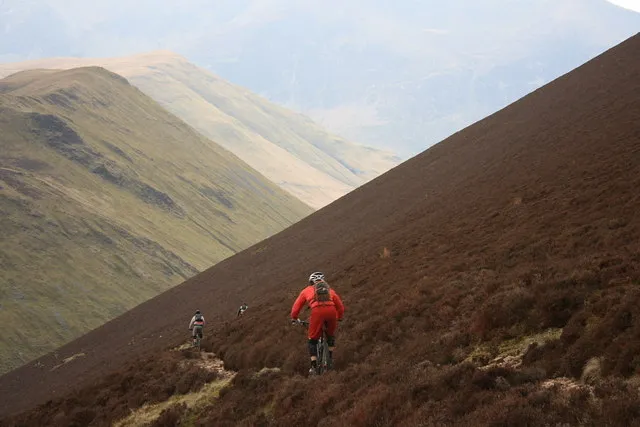
Photo: Mick Garratt, CC BY-SA 2.0, via Wikimedia Commons
There's a version of armour buying that goes something like this: find a set that fits, wear it everywhere, job done. It works right up until you spend a July afternoon pedalling round Swinley in a full chest-and-back rig — or you drop into the rock at Fort William with nothing but a slimline back insert and a lot of optimism.
UK trail centres aren't variations on a theme. They're basically different sports sharing a tyre width. So here's a postcode-first way of thinking about armour: where to spend, where to save, and how not to look like you've misread the room.
The three variables that actually matter
Before the location-by-location stuff, get these straight.
Coverage is about consequence, not speed. Rocky, high-consequence ground punishes a routine off far harder than a smooth, well-shaped jump line does.
Ventilation matters anywhere you have to pedal to earn your turns. Uplift days are a completely different calculation — you can happily wear a sauna if a van is carrying you back to the top.
Packability is the one riders forget. If your pads won't fit in a hip pack or roll into a frame bag, they'll live in the car. The best armour is the stuff you actually put on.
Bike Park Wales: the uplift day
Merthyr Tydfil's big machine-built playground runs from flowing blues and reds through to proper black tech and some seriously long jump lines. Trail names get retired and replaced, but the pattern holds: smooth and fast up top, rougher and more consequential the deeper you go.
Because the uplift handles the climbing, ventilation drops down the priority list and coverage climbs up it. A full-face, a decent back protector, knee-and-shin combos and elbows are a sensible baseline. If you're spending the day on the doubles, chest protection is worth a look too — cases on big jumps tend to involve handlebars and ribs.
What you don't need is to carry it. Leave the spare in the van between runs and lean on kit that goes on and off fast. Buckles and zips beat dragging a sweaty liner over your head forty times in a day.
Fort William and the Nevis Range: hard rock, hard weather
The gondola-served terrain at Fort William is a different animal. Exposed rock slabs, steep chutes, abrasive Scottish stone and weather that can turn a dry line greasy between one run and the next. This is where consequence lives.
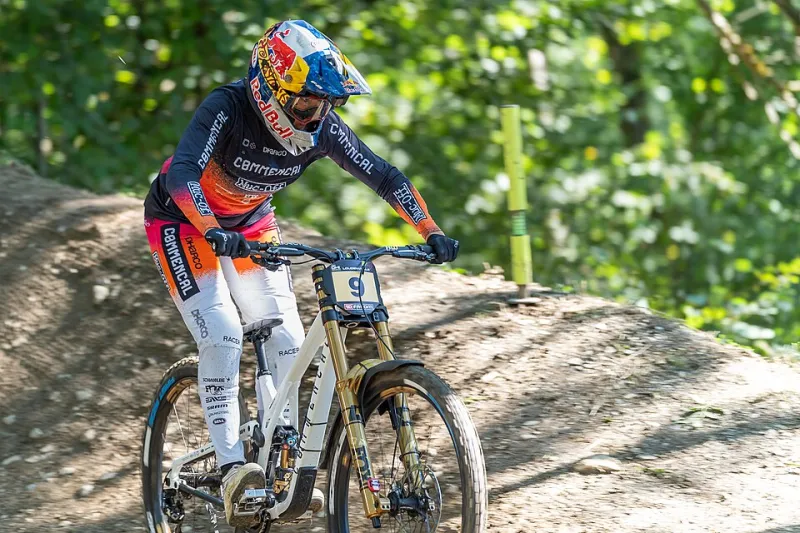
If any UK venue justifies full coverage, it's this one. Full-face, chest and back, hard-shell or heavily reinforced knees, gloves with real knuckle coverage, and a neck brace if you're riding at pace or racing. The gondola means you're not paying a pedalling penalty, so there's precious little reason to travel light.
One practical note: wet rock shreds fabric. Look at the outer shell before anything else — reinforced panels and solid stitching are what stop a set of knees becoming a set of rags by August.
Antur Stiniog and the North Wales slate
Slate is the detail people underestimate. It's sharp, it's abrasive, and it eats thin fabric and cheap straps for breakfast. Uplift vans take care of the climbing, so once again you can dress for the crash rather than the climb.
Prioritise durability here: taped seams, abrasion-resistant panels, knee pads with a proper hard cap rather than a soft foam face, and a back protector that stays put instead of riding up on the descents.
Dyfi, Revolution and the steep mid-Wales tracks
Steep, loamy, natural-feeling ground where the bike goes quiet and the hill disappears from under you. Speeds are often lower than a World Cup track, but the tumbles are awkward — roots, off-cambers and trees that don't move.
Back protection earns its keep. So do elbows, which get ignored until the first time you clip a bar on a trunk. Knee pads with side coverage make more sense than pure downhill bricks, because you'll be moving around a lot.
Glentress and Innerleithen: the pedal-heavy Tweed Valley
This is where the packability question really bites. Glentress serves up long, pedally days; Innerleithen brings steeper, rootier descents and a bit of everything else. Either way, you're climbing, repeatedly.
So this is home turf for the packable setup: a slim back insert worn under a jersey, lightweight knee pads you can pedal in all day, and elbow sleeves rather than full shells. A well-vented lid with a removable chin bar is a tidy compromise if you want the option of more coverage without cooking on the way up.
Swinley, the Forest of Dean and Cannock Chase
Sandy, rolling, rooty and mostly low-consequence. The classic mistake here is over-armouring. A full chest-and-back rig on a summer pedal day is a sweat experiment, and an overheated rider makes worse decisions than a slightly under-dressed one.
Go light: knees, maybe elbows if you're pushing it on the jump lines, and a vented helmet. On the more technical off-piste, a slim back insert is a fair compromise rather than a hardshell.
Dirt jumps and pump tracks
Short sessions, repeated slams, hard landings. Knees, elbows and a solid lid. Full-face if there's a gap involved. Everything should be quick to remove, because you will absolutely stop for a chat.
The two-bag system
The single most useful thing you can do is stop pretending one setup covers the country. Build two: an uplift bag (full coverage, hard shells, spare jersey) and a pedal bag (light, breathable, packable). Everything in both needs to fit properly — loose armour shifts on impact, and shifting armour protects the wrong bit of you.
Wash it, dry it out of direct sun, and check the foam every few months. Then when the forecast says Fort William in October, you'll already know which bag to grab.