Pink Stickers Aren't a Fit System: Rethinking 'Women's Armour' for UK Riders

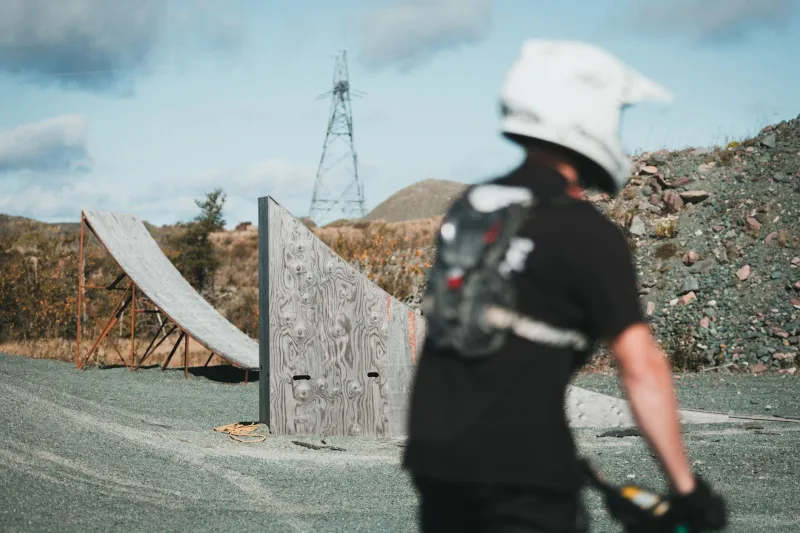
Photo: Bureau of Land Management, Public domain, via Wikimedia Commons
There's a moment, usually in a badly lit changing room with a mirrored wall and a queue outside, when it dawns on you that the "women's specific" pad set you're wrestling with is a men's small in a different colourway. The shoulder straps splay wide. The chest panel gaps. The hip belt was very obviously drafted for someone with a completely different waist-to-hip relationship. And yet the box says this is shaped for you.
It isn't. It's shaped for a slightly smaller version of the same rider the men's set was built around. That's not a cheap shot at any single brand — it's the honest state of a market where "women's" is frequently a size-range extension rather than a fit philosophy, and where "unisex" has become the industry's favourite way of not answering the question at all.
Unisex is just men's with better manners
Unisex sounds neutral. In practice, a unisex medium is almost always a men's medium, patterned from a male torso and graded up and down from there. For a decent number of riders, that's genuinely fine. For anyone whose chest volume, hip width or shoulder slope doesn't match the underlying assumption, it means straps that ride up, chest protectors that sit proud of the body, and a hip belt that either digs in or slides down mid-descent.
The frustrating bit is that the label gives you no warning. You can't tell from the swing tag whether the pattern was rebuilt or simply recoloured, and staff in a lot of UK shops genuinely don't know either.
The five measurements that actually matter
Forget height and weight charts. Body armour is a shell-plus-straps problem, and shells care about geometry. Before you buy anything, get a soft tape and note down:
- Chest circumference at the widest point, not under the bust. This determines whether a hard chest panel can sit flat or will perch.
- Shoulder width, seam to seam, measured across the back. Too wide and the pad rotates forward on impact.
- Torso length, from the base of the neck to the top of the hip bone. This is the single most overlooked number in armour fitting and the reason some riders get a back protector that stops halfway down.
- Natural waist and hip circumference, taken separately. The ratio, not the size, tells you whether a hip belt will stay put.
- Shoulder slope, which you can eyeball by standing against a wall — square-shouldered riders and sloped-shouldered riders need very different strap geometry from the same shell.
Write them on your phone. Take them shopping. A retailer who can't tell you how their sizing maps onto those numbers is a retailer who is guessing.
Layering changes the fit more than the pad does
A pad set that fits beautifully over a thin summer base layer can become a medieval instrument over a winter mid-layer, a hydration pack and a waterproof shell. UK riding is a layering sport whether we like it or not, and armour has to be bought for the layer system it lives in, not the one it was tried on in.
A few practical rules. Try pads on over the base layer you actually wear, not a t-shirt. If you ride with a pack, wear it in the fitting — a back protector plus a pack plus a mid-layer is where shoulder straps start cutting. And if you're between sizes, don't automatically size up; a loose shell slides on impact, which is worse than a snug one you've adjusted properly.
Adjustments that earn their place
Not all adjustability is equal. Strap length adjustment at the shoulder is genuinely useful and near-universal. Removable or repositionable insert pockets are worth paying for, because they let you shift impact protection onto the parts of your body that actually meet the ground. A separate, independently adjustable hip belt is a real differentiator.
Less useful: anything marketed purely on "contoured" shaping with no numbered sizing behind it, and pads where the only concession to different bodies is a shorter torso with unchanged shoulder geometry. If the straps are fixed and the shell is rigid, no amount of clever foam is going to fix a body it wasn't patterned for.
Ask these before you commit
Whether the pattern was built from scratch or graded from a men's block. Whether the hip belt is independently adjustable. Whether inserts can be moved. Whether the shop will let you take it out for a demo ride — several UK trail centres and shops now do short-term hire or try-before-you-buy, and it's worth asking even if it isn't on the website. And whether returns are accepted on tried-on armour, because fit problems often only appear at the forty-minute mark when you're sweating.
None of this is glamorous. But the aim isn't a pink sticker or a women's tab on a product page — it's armour that stays where it's put when you need it to. That's a measurement problem, not a marketing one.