Borrow, Buy or Bin: Does Your MTB Armour Survive Coasteering, Packrafting and Gravel?
You've spent proper money on a knee and elbow set that's seen you through a wet summer at a Welsh trail centre. Now a mate's booked a coasteering weekend, someone else has a packraft on the go, and there's a gravel overnighter in the calendar. The obvious thought: can the same kit do all three?
The short answer is that MTB armour crosses over better than most people think, but not in the direction they expect. Gravel is a near-perfect match. Packrafting is where things get genuinely sketchy. Coasteering is where your pads quietly become a hazard.
The three rules that decide everything
Before sport-by-sport detail, here's the filter. Padding transfers between sports when three things hold true: it stays put without a bike holding it in place, it doesn't absorb or trap water, and it doesn't introduce a snag or buoyancy problem in an environment where falling isn't the main risk.
MTB armour is designed around a specific failure mode — hitting hard ground at speed while attached to a bike. Take the bike away and you're relying entirely on straps, which is where most crossover attempts fall apart.
Coasteering: bin it
Coasteering is scrambling, jumping and swimming along a rocky shoreline, usually in a wetsuit, usually with salt water in your face. Despite sounding like a close cousin of trail riding, it's the worst possible environment for bike pads.
Start with the wetsuit. Neoprene is designed to sit skin-tight and flush a thin layer of water against you. Strapping a rigid knee shell or a back protector over the top creates pressure points, traps cold water, and stops the suit doing its job. Underneath the suit is worse — you'll chafe in minutes and the pad will end up in the wrong place as soon as you get wet.
Then there's the water itself. Salt water destroys hook-and-loop fastenings faster than anything else in outdoor kit — the salt crystallises in the hooks and the grip goes. Foam inserts that are fine in rain will hold water in a soaking, and a heavy, waterlogged back protector is a genuine liability when you're trying to clamber out of a swell onto wet rock.
Worst of all is the snag question. Coasteering involves squeezing through gaps and pulling yourself over ledges. Loose straps and hard edges catch on rock. If your pad catches while you're being pushed by water, that's not a scrape — that's a real risk.
Use the wetsuit's built-in padding, hire the purpose-built kit if the centre offers it, and leave the MTB armour in the car.
Packrafting: mostly buy, with caveats
The packraft question is subtler. You're paddling flat or gentle moving water, often in a drysuit or wetsuit, with a buoyancy aid over the top. Your pads will fit under or over a PFD to varying degrees, and the real constraints are mobility and snagging.
Knee pads: usable, and worth having for portages and rocky put-ins, as long as the straps are low-profile and the shell is soft rather than hard. Hard-shell knee caps are fine on a bike, less so when you're kneeling in a boat.
Elbow pads: largely pointless. You aren't going to fall onto your elbows, and restricted arm movement is a genuine paddling problem.
Back protector: bin it. It sits exactly where your buoyancy aid needs to, it changes the trim of the boat, and in a swim it's dead weight. A PFD does the flotation job; your spine doesn't need a second, unhelpful layer.
The one piece of MTB kit that genuinely earns its place here is a thin, soft, low-profile elbow or knee sleeve for rocky portages — and even then, only if it fits under your drysuit layers without bunching.
Gravel: buy, uncomplicatedly
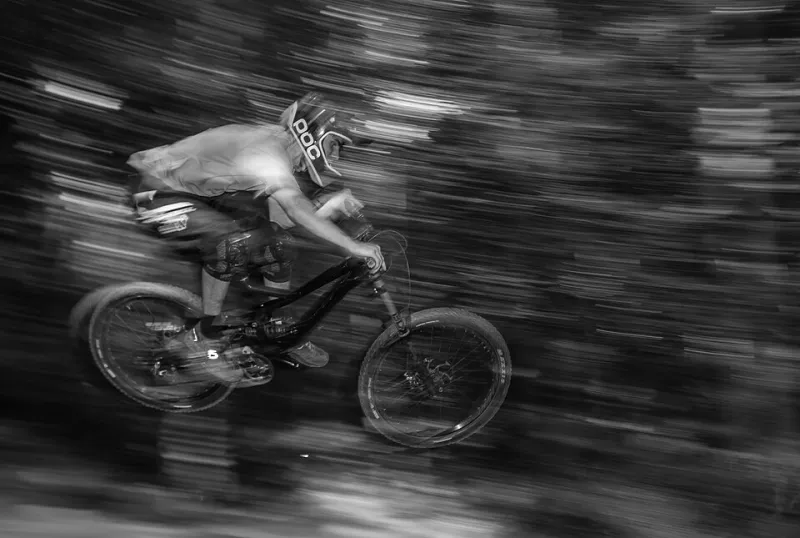
Gravel is the crossover that actually works. The loading is similar, the speeds are lower, the ground is hard, and you're still attached to a bike — which means the strap system isn't doing all the work on its own.
Knee pads transfer perfectly. Light, pedal-friendly MTB knee pads are arguably the single best crossover purchase in this whole article, because the most common gravel injury is a slow, stupid, low-speed tumble onto a rock or a rutted descent.
Elbow pads are optional; most riders skip them. A back protector is overkill unless you're riding technical descents at speed. And if you're bikepacking, watch the layering — pads over bib tights can chafe over a long day, and pads under baggies can bunch.
The borrow-buy-bin checklist
- Knee pads, soft, low-profile: borrow for gravel, buy if you'll ride regularly, bin for coasteering.
- Knee pads, hard shell: borrow for gravel, bin for packrafting and coasteering.
- Elbow pads: borrow for gravel, bin for paddling, bin for coasteering.
- Back protector: buy for bike use only — bin for anything water-based.
- Full upper-body armour: doesn't belong in any of the three. It's a downhill product.
When renting is the smarter call
UK activity centres increasingly rent wetsuits, buoyancy aids and helmets as a package, and a lot of coasteering providers will simply supply what you need. That's almost always better than improvising with bike kit — the gear is rated for the environment, it's maintained, and you're not risking damage to a pad set that cost you more than the weekend.
Same logic applies to packrafting: if you're hiring a boat, hire or borrow the safety kit that was designed for it.
If you do take bike pads near salt water
Rinse everything in fresh water the same day, straps included, and dry it fully out of the bag. Check the hook-and-loop for grit before it goes back in the cupboard. A pad set that's had one careless coastal weekend will still work, but the fastenings will age noticeably faster — and the only thing worse than buying new armour is buying it because the old stuff rotted in a dry bag.