Kissing Gates and Kneecaps: Padding for the Bits UK Trail Specs Forget
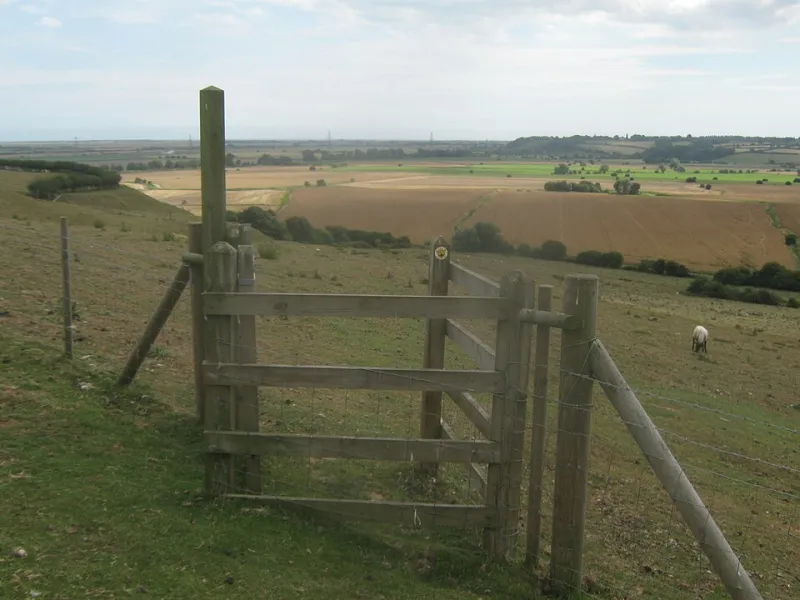
Photo: David Anstiss , CC BY-SA 2.0, via Wikimedia Commons
There is a certain sort of UK trail impact that never makes it onto an armour spec sheet. It does not happen at 30mph. It happens at about 3mph, with one foot unclipped, a handlebar hooked on a gatepost and a kneecap heading towards a lump of gritstone. Alpine armour charts are built around high-speed crashes and rock gardens. British access land is built around kissing gates, stone stiles, squeeze gaps and walls that have been there since before anyone thought to rate padding for them.
The hazards that never make the spec sheet
Kissing gates, stone stiles, squeeze gaps and gritstone walls are not freeride features. They are access furniture, and they are everywhere on bridleways and footpaths across the Peak District, Yorkshire Dales, Lake District and Pennine routes. A stone stile is basically a blunt-force exam with a step on top. A squeeze gap asks you to thread yourself and your bike through a space that was designed for walkers, not handlebars. A gritstone wall is a very old, very hard object with no give whatsoever.
These obstacles create low-speed impacts and awkward falls. You are not sliding out on a berm; you are tipping over while trying to lift a bike over a barrier, catching a hip on a gate latch or dabbing a foot onto uneven ground. The energy is lower, but the angle is often worse. A slow fall onto a stile edge can put force straight into a hip, ribs or elbow with no run-out.
Why low-speed falls still hurt
Lower speed does not mean lower consequence. When you fall at speed, you often slide or roll. When you fall at a gate, you rotate around a fixed object. Your body can get folded, twisted or stopped suddenly. That is exactly the sort of impact that makes coverage and fit matter more than a big number on a label. Armour rated for high-energy impacts is not useless here, but it may be aimed at the wrong bit of the body. A back protector is great on a downhill track; it does not do much for the top of your thigh when you catch it on a gatepost.
Protection on UK access land is about covering the bony bits that meet hard objects at odd angles, and keeping that coverage in place when you step, lift, climb and scramble. If a pad shifts when you hoist a bike over a stile, it will shift in a fall.
Where to put the padding
For riders, the priorities are hips and upper thighs, knees, elbows and forearms. Hip pads earn their place because gateposts, stile edges and low walls love a hip. Knee pads need to stay put through pedal strokes and step-overs, not just sit nicely in the shop. Elbow and forearm coverage is useful when you dab a hand onto a wall or catch a sleeve on a latch. For runners and fast hikers on access land, knees, forearms and hips are the realistic starting point. A lightweight hip belt or impact shorts can be more useful than a bulky vest.
Placement matters more than thickness. A slim hip pad that sits on the point of the hip is better than a thick pad that rides up to your waist. A knee pad that covers the kneecap and the top of the shin is better than a tiny cap that leaves the edges exposed. Look for pads that are shaped for a bent leg, not a straight one.
Garment features that earn their keep
British trail kit has to deal with damp, cold, then sudden warmth on a climb. Bulk is the enemy of actually wearing the stuff. Look for low-profile hip pads, adjustable knee straps, silicone grippers, articulated knees and stretch panels that let you step over a stile without the whole garment migrating. Secure pockets are useful for a phone and a gate key. Dangling straps are a liability around bikes and barriers.
Breathability is not a luxury. If you overheat on the climb, you will strip layers and leave pads behind. A slim hip pad you actually wear beats a full bib you leave in the car. Repairability is a bonus too: replaceable padding and sturdy stitching make sense for kit that will meet gritstone regularly.
The three-minute field test
Before your next ride or run, put your kit on and test it against the obstacles it is meant for. Walk through a kissing gate. Step over a stile-height box or a low wall in a safe place. Lift your bike over a barrier, or mimic the movement with a loaded pack. Squat, twist and step down off a curb. Then check where the pads have ended up. If you have to tug a hip pad back into place after a stile, it will fail in a fall. If a knee pad has rotated, the strap system is wrong for you.
Do this in the car park, not on the side of a busy trail. The test is simple: can you move through UK access furniture without the armour moving first? If the answer is no, adjust the fit or change the garment. No pad replaces judgement, and no spec sheet knows your local stile.
Final thoughts
UK access land rewards armour that is modest, mobile and well placed. It does not need to look like downhill race kit to be useful. It needs to cover the bits that meet gritstone, stay put through a squeeze gap and let you breathe on the climb. The next time you read an armour spec, enjoy the numbers. Then go and look at the gate at the end of the lane. That is the real test.