The Price Tag Isn't the Protection: A Rider's Black Friday Armour Check
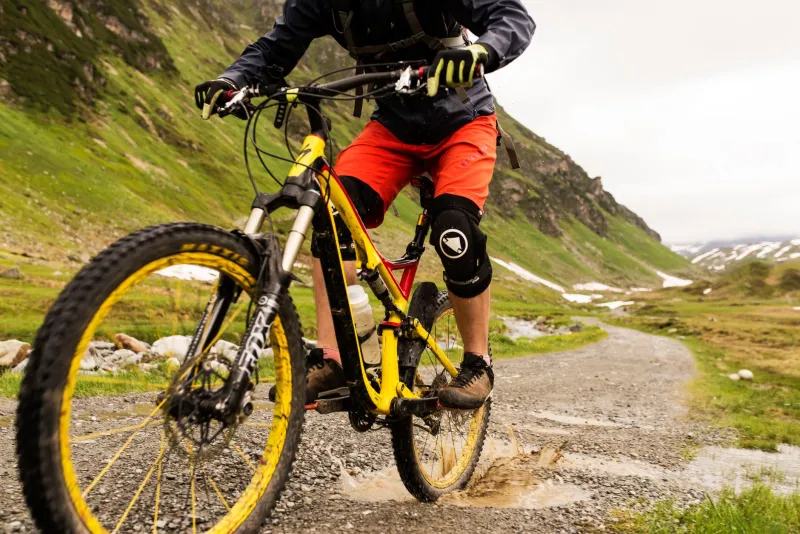
Black Friday 2026 lands on 27 November, but the armour sales have already started. If you ride British trails, the appeal is obvious: pads, back protectors and layered kit are expensive, and a genuine markdown is welcome. The trouble is that armour is not a telly. A cheap telly that fits on your wall is still a telly. A cheap pad that does not fit, does not stay put or does not meet the standard you think it does is just expensive clutter.
A discount is not a fit system
The first thing a red tag does is distract you from sizing. Before you compare prices, compare the pad to your body and your riding. A knee pad that rotates when you pedal is not a bargain, even at 40 per cent off. A back protector that leaves a gap at the base of your spine is not a bargain either. If you are buying online, check the return window before you get attached to the colourway. Try the pad on over the base layer you actually wear, with the shorts you actually ride in. Bend, squat, pedal, and see whether the coverage stays where it should. Keep the tags on and the packaging intact until you are sure. British weather adds another variable: the pad has to work with winter tights, muddy overshoes and a jacket that bunches at the waist. If it only fits in a mirror, it does not fit on a trail.
The RRP is a story, not a benchmark
A lot of Black Friday armour discounts are measured against a recommended retail price that few shops charge for long. That does not automatically make the deal dishonest, but it does make the percentage less useful than it looks. Check the recent street price, not just the crossed-out number. If a pad has been sitting at roughly the sale price since the summer, the red tag is theatre. If the price has genuinely dropped below the usual range, that is worth a look. Bundles need the same treatment. Two pads and a back protector for one price can be good value, but only if you needed all three and they all fit. Buying a spare set of elbow pads because the bundle maths works is how kit drawers fill up with armour you never wear. Previous-generation protection is often the sweet spot: same certification standard, less marketing, lower price. Discontinued colours are fine if the fit and the standard are unchanged. Discontinued protection is not.
What genuine value looks like in 2026
The deals I would take seriously this year are the boring ones. End-of-season stock from a shop that has to clear space. Previous-generation pads where the only change is the fabric colour or the strap layout. Bundle savings on items you would have bought separately at full price. Clearance on a model you have already tried on in a shop, in your size, with the certification you want. The deals I would treat with suspicion are the ones that rely on urgency: countdown clocks, low-stock banners and phrases like last chance, without any detail about the product. Urgency is not information. If a retailer cannot tell you the standard, the level, the return window or the crash replacement terms, the discount is doing all the persuading. That is rarely a good sign.
The certification check that survives the sale
Armour certification is not a vibe. For limb protectors, look for the relevant EN 1621-1 marking and the level. For back protectors, look for EN 1621-2 and the level. There are other standards for other sports and other pieces of kit, but the principle is the same: the product should state what it has been tested to, not just that it is CE approved or protective. UKCA marking matters for the UK market, and CE marking still appears on plenty of legitimate products. Neither marking is a substitute for reading the standard and the level on the label or in the product details. If the sale page is heavy on lifestyle photos and light on specifications, ask the retailer before you buy. A genuine deal survives a question. A fake one usually does not.
Crash replacement is part of the price
If you ride often, crash replacement cover can be worth more than a slightly bigger discount. Read the terms before checkout. Does the cover apply to sale items? Do you need to register the product within a certain window? Is it a free replacement or a discounted one? Who pays postage? What proof of purchase is required? Some schemes are excellent and some are basically a coupon for a future purchase at full price. Neither is wrong, but you should know which one you are buying. A pad at 30 per cent off with no crash replacement might still be good value if you are gentle on kit. A pad at 15 per cent off with a genuine replacement scheme might be better for someone who rides bike park laps and expects to test it. The discount is only one part of the cost.
Return windows and the changing-room reality
Online armour buying lives or dies by the return window. Check it before the sale ends, not after the parcel arrives. Look for hygiene exclusions, whether worn items can be returned, and whether you need to keep the original packaging. Some shops are generous; some are not. If you are between sizes, order both if you can afford the temporary outlay and the returns process is clear. If you cannot, size up or down according to the pad's intended fit and the layers you wear, not according to the model on the website. A pad that is slightly too loose can be tightened with straps. A pad that is too small cannot be stretched into comfort. And if the sale item is final sale, treat that as a fit risk, not a challenge.
The British trail reality check
A cheap downhill pad is not automatically a good deal for a trail centre lap in November. British trails are often wet, rooty and stop-start. You pedal more than the photos suggest, and you layer more than the sizing charts suggest. A pad that is too bulky can rub, trap water and make a long climb miserable. A pad that is too light can be fine for cross-country but optimistic for a weekend at BikePark Wales. Match the pad to the riding you actually do, not the riding you watch on YouTube. If you need one set for everything, prioritise fit, coverage and breathability over the biggest claimed impact rating. The best pad is the one you will actually wear when it is three degrees and drizzling.
The ones that are not worth it
I would walk away from unnamed armour with no certification details, pads that need modifying to fit, and clearance items with no returns and no crash replacement. I would also be wary of buying kids' pads a size too big to last another season. Growth spurts are real, but a pad that slides out of position is not protection. Pink stickers and women's colourways do not make a fit system, either. A sale is not the moment to gamble on a new brand with no paperwork. It is the moment to buy the right thing at a better price.
A short checklist before checkout
Check the standard and level, not just the word protective. Check the return window and hygiene exclusions. Check whether crash replacement applies to sale stock. Check the recent street price, not only the RRP. Check the size against your actual layers. Check that the pad stays put when you pedal. If the answers are clear, the deal is probably real. If they are not, the discount is doing too much work. Black Friday 2026 is a good time to buy armour you already needed. It is a bad time to buy armour you have not tried, cannot return and do not quite understand.