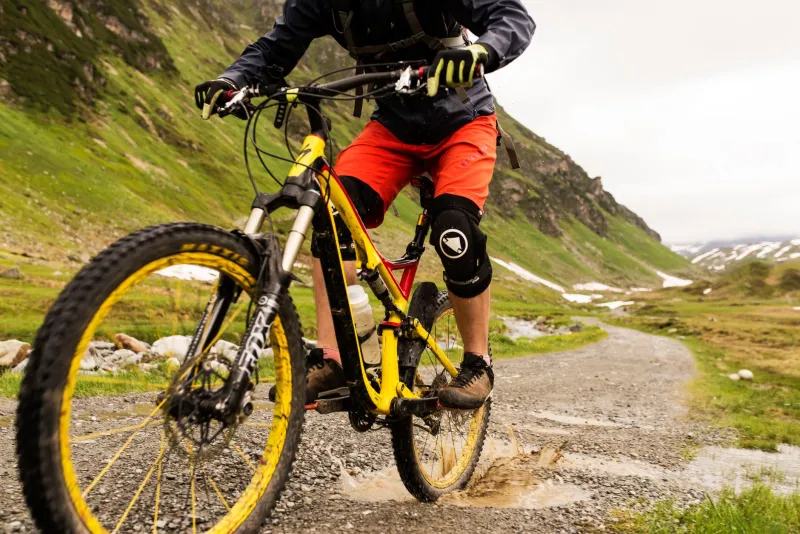
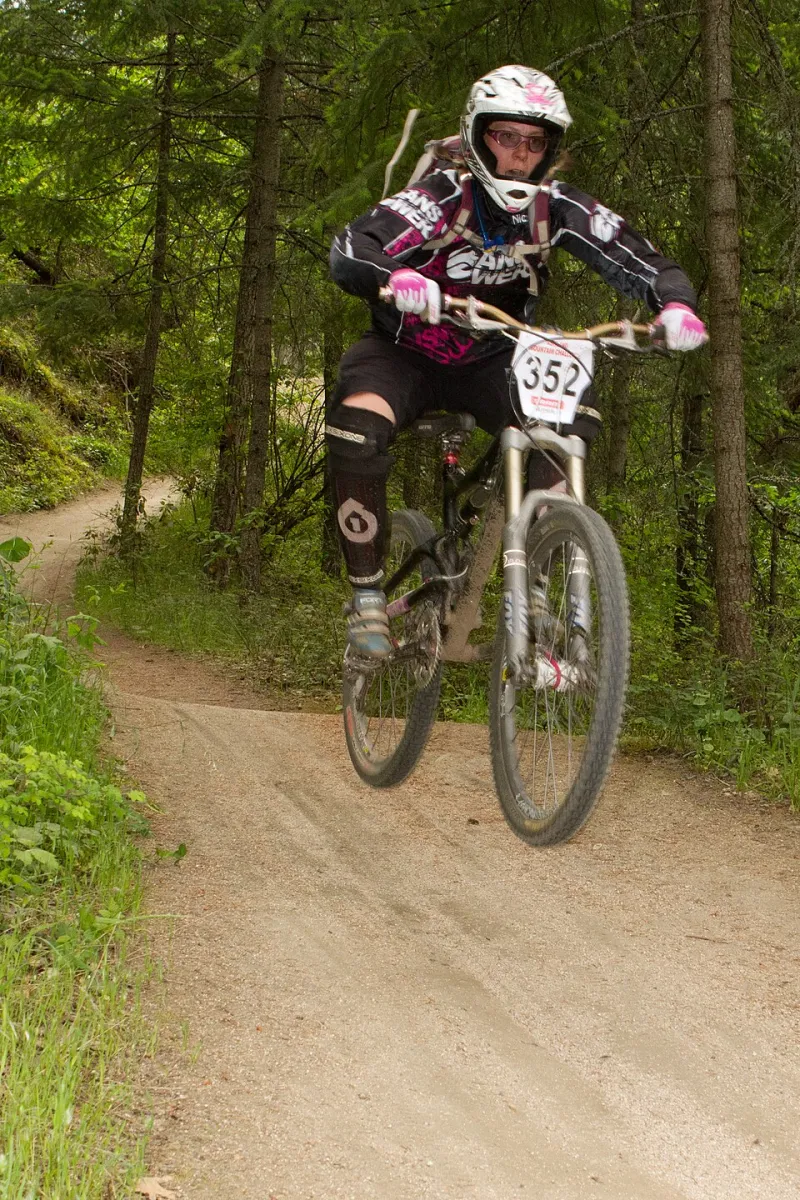
The Quiet Nudge: When Protection Starts Writing Cheques Your Skill Can't Cash
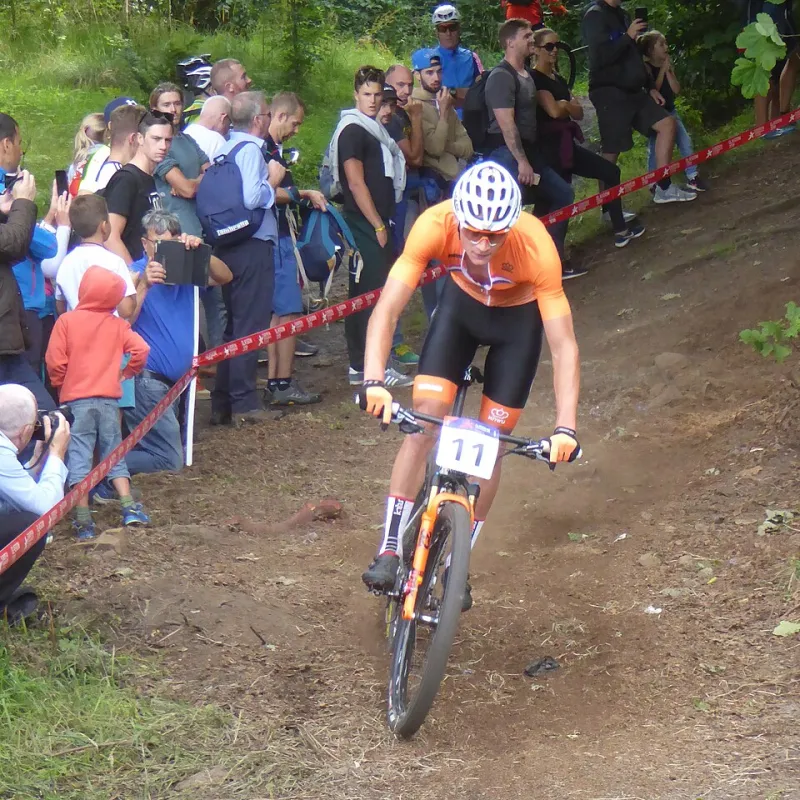
Photo: Cs-wolves, CC BY-SA 4.0, via Wikimedia Commons
There's a particular feeling you get clipping into a fresh set of pads in a trail centre car park. The car park is muddy, the flask is lukewarm, and your riding buddy is already talking about 'the new bit'. You feel a bit more... willing. Not invincible — you're British, not delusional — but willing. That quiet shift is worth paying attention to, because it's where risk compensation lives.
Risk compensation is the idea that people adjust their behaviour in response to perceived safety. Give someone a seatbelt and they might drive a little faster; give a rider a back protector and they might take a line they'd otherwise skip. The classic reference is Sam Peltzman's 1975 work on safety regulation, and Gerald Wilde's risk homeostasis theory, which argued we each carry a target level of risk and unconsciously trade safety gains for speed or thrills. The honest caveat: the evidence is mixed. Some studies find the effect, some don't, and sport is a messy place to measure it. Sensation-seeking riders buy armour in the first place, so cause and effect get tangled.
But you don't need a peer-reviewed paper to notice the nudge. You just need to watch yourself on a second lap.
The Blue-Grade Trap
Blue-grade woodland loops are where the quiet nudge does its best work. The trail is familiar, the consequences are modest, and the pads feel like overkill until they don't. You roll a rooty chute on lap one. On lap two, with knee pads on, you're eyeing the little lip beside it. By lap three you're calling it a jump. Nothing wrong with progression — that's the point of riding — but progression should come from skill and inspection, not from the fact that your shins are covered.
I've seen it at trail centres across the UK: the same rider who walks a feature in a t-shirt sends it in full kit without a second look. The armour hasn't changed the root, the drainage rut or the tree stump on the outside line. It's changed the rider's calculation of what a mistake costs. That's fine up to a point. The trouble starts when the calculation becomes 'I can crash here' rather than 'I can ride here'.
Gap Jumps and the Permission Slip
At the sharper end — bike parks, gap jumps, the sort of feature that has a name and a reputation — the nudge gets louder. A full-face and a spine protector are sensible. They are not a run-in. A gap doesn't care how much you spent on pads; it cares about speed, commitment and whether your front wheel is where you think it is. Armour reduces the severity of some crashes. It doesn't add a metre to your jump.
The moment protection becomes permission is usually the moment you stop asking questions. You skip the walk-down because you're kitted. You follow a faster rider because you feel bulletproof-ish. You hit the same jump again after a messy landing because 'the pads will take it'. That last one is the tell. Pads are there to take one for you, not to be your plan.
How to Spot the Shift
You don't need a lab. You need a bit of honesty. Warning signs include: riding a grade above your usual comfort without a clear reason; using armour as a reason to skip inspection; going faster on lap two than lap one on a trail you don't know; and the phrase 'I'll just send it and see' escaping your mouth while your brain is still doing the maths. None of these are moral failings. They're just signals that the margin has moved.
The Pre-Ride Margin Check
Try a three-question audit before you drop in. First: what's the one new thing today — a feature, a speed, a line? Second: what happens if it goes wrong, and is the armour actually relevant to that consequence? Third: where's my exit if I don't like it on the day? If you can't answer the third, you're not ready for the first.
Then do a baseline run. Ride the feature at the speed you'd ride it without pads. If it feels good, add a little. If it feels sketchy, the pads aren't the missing piece. And keep one rule in your head: armour should expand your error window, not your ego. A bigger margin means you can make a mistake and ride home. It doesn't mean you can make a bigger mistake.
The Verdict
None of this is an argument against protection. Body armour is one of the best things you can put between a British trail and your ribs, and the right kit genuinely keeps riders in the sport. But it's a seatbelt, not a licence. The riders who get the most out of it are the ones who treat it as a way to survive a bad day, not a way to book one.
So next time you zip up and feel that quiet nudge, pause. Ask what it's telling you. If the answer is 'I've got a bit more room to learn', brilliant. If the answer is 'I've got a bit more room to show off', maybe walk the feature first.