Strap Creep on the Long Drag: The Uphill Armour Check UK Riders Skip
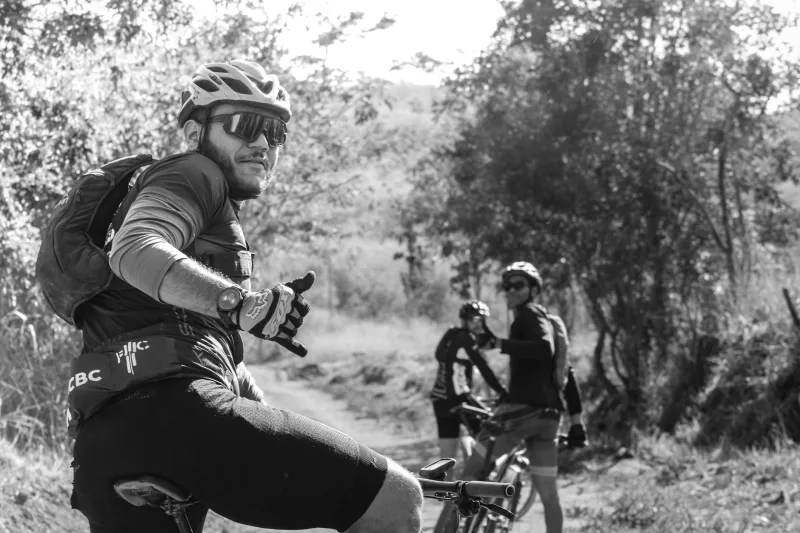
Most riders fit armour in a car park. You bounce on your heels, bend your knees, swing your arms, and decide the pads feel solid. Then you point the bike at a long UK fire road, settle into a granny-gear grind, and within ten minutes the knee shell has rotated, the elbow strap has crept, and the back protector is doing something suspicious near your neck.
That is not a brand problem. It is a test problem. Static fit tells you whether armour will sit still while you stand still. A climb tells you whether it will stay put while you pedal, sweat, breathe hard and carry water. Here is a simple 20-minute uphill protocol for knee, elbow and back protection, plus the adjustments that tend to matter when you get to the top.
Why the car park lies
Standing in a shop or beside the boot, your body is doing very little. Your quads are not firing, your shoulders are not steering, and your skin is dry. Armour can look perfect in that state. On a fire road, three things change at once: your legs pump, your torso rocks, and you start to sweat. Straps that felt snug can creep a centimetre at a time. Hard shells can rotate around the knee or elbow. A back protector that sat neatly between your shoulder blades can ride up as you extend your arms and lean into the climb.
UK fire roads are a particularly good test bed. They are often steep enough to force real effort, rough enough to shake straps loose, and long enough for small fit faults to become obvious. Trail centres in Wales, forestry tracks in Scotland and the long drags in the Lake District all do the same job: they expose armour that only works when you are stationary.
The 20-minute fire-road protocol
You do not need a lab. You need a steady climb, your normal riding kit and a loaded hydration pack. Wear the same base layer you would use on a real day out. Put two litres of water in the pack, or whatever you normally carry. Fasten everything as you would at the trailhead, then set a baseline before you pedal.
Check three things at the start: where the knee shell sits over the kneecap, whether the elbow pad is centred on the point of the elbow, and where the top edge of the back protector sits relative to your neck. Take a photo of each strap tail if it helps. Then ride uphill for 20 minutes, stopping at five-minute intervals. Keep the effort honest but not frantic. You are testing fit, not fitness.
At each stop, repeat the same checks. Has the knee pad slid down or twisted outward? Is the elbow pad still covering the joint, or has it rotated toward the inside of the arm? Has the back protector lifted, bunched or shifted to one side? Can you still slide a finger under each strap without forcing it? If a strap has gone from snug to tight, or from snug to loose, make a note. That is the kind of feedback a car park cannot give you.
Sweat is part of the test, not an inconvenience
A dry pad and a sweaty pad behave differently. Moisture reduces friction between the liner and your skin, which is why some pads feel fine for ten minutes and then start to migrate. If your knee pad only stays put when the top strap is cranked down hard, that is not a good fit. You are just adding pressure to compensate for a shape mismatch.
Use a synthetic or merino base layer rather than cotton, and make sure the pad liner is sitting flat against the skin or the base layer, not bunched behind the knee. Some riders prefer a thin base layer under knee pads; others prefer direct skin contact for grip. Test whichever you actually use. The point is to find out before the descent, not halfway down a rocky chute.
Your pack is part of the fit
A hydration pack is not a neutral accessory. Shoulder straps, sternum straps and waist belts all interact with back and elbow protection. A waist belt can push a back protector upward. A sternum strap can change how the shoulder straps sit. A pack that bounces can drag the whole system around.
Load the pack properly and ride with it. If the back protector rides up, try loosening the pack waist belt slightly or routing it differently. If the shoulder straps interfere with the top of the back protector, adjust the pack before you adjust the armour. If elbow pads twist because your arms are being pulled into an unusual position by the bars and pack, that is useful information. The best armour fit is the one that works with your whole setup, not just the pad in isolation.
Adjustments that earn their keep
Start with strap routing. A strap that runs slightly higher or lower can change how a shell sits. Check whether your knee or elbow pad has a adjustable cup or a strap that can be moved. Small changes often do more than brute force. If a pad comes with different liner thicknesses, try them on the climb. If the back protector has shoulder adjustment, use it to set the top edge where it belongs when you are in a riding position, not when you are standing upright.
Do not modify hard armour or cut straps to make a poor fit work. If the pad needs to be tighter than is comfortable just to stay in place, it is the wrong shape or size for you. That is a return or exchange issue, not a DIY issue. Keep the pads clean and test them indoors first if you are unsure about sizing, then repeat the fire-road check once you are outside.
When to admit defeat
A pad fails the uphill test if it rotates enough to expose the joint, if a strap creeps more than a small adjustment can fix, or if the back protector lifts into your neck when you extend your arms. Discomfort is also a fail. A pad that leaves deep marks after 20 minutes will be miserable on a full day.
The descent is the final exam, but the climb is where you find out whether you have a chance of passing. If your armour stays centred, comfortable and secure on a long, sweaty UK fire road, you have a much better reason to trust it when the trail points down. At TPro Body Armour, that is the sort of testing we would rather riders did before the first rocky section, not after it.